The Foolproof Blueberry Crisp: A Chef’s Beginner-Friendly Guide
No soggy bottoms, no runny filling — just a bubbling, golden dessert anyone can pull off on the first try.
I still remember the first blueberry crisp I ever made. I was maybe nineteen, working my first line cook job, and I volunteered to bring dessert to a staff dinner because I figured, how hard could it be? Fruit, sugar, some crumbly stuff on top, into the oven. Forty minutes later I pulled out something that looked less like a crisp and more like blueberry soup with wet gravel floating on top. The topping never crisped. The filling never set. It was, in a word, sad.
Here’s the good news: the fix for almost every blueberry crisp disaster comes down to about four small decisions, and once you know them, you genuinely cannot mess this up. That’s what I want to walk you through today — not just a recipe, but the “why” behind each step, so you understand what’s happening in that oven instead of just following instructions blindly.
Key Takeaways Before You Start:
- A crisp has an oat-and-butter topping; a crumble uses flour, sugar, and butter without oats — that’s the entire difference.
- Frozen blueberries work beautifully and are often more reliable than fresh, as long as you don’t thaw them first.
- A thickener (cornstarch, in our case) is non-negotiable if you want sliceable, not soupy, filling.
- A shallow, wide baking dish beats a deep one every time — more surface area means more crispy topping per bite.
- Let it rest 15–20 minutes after baking. This is the step almost everyone skips, and it’s the one that actually sets the filling.
Crisp, Crumble, or Cobbler? Let’s Clear This Up First
People use these words interchangeably, and honestly, I get why — they’re all warm fruit desserts with a topping. But in a professional kitchen, we draw a clear line. A crisp gets its name (and its crunch) from oats mixed into the topping. A crumble skips the oats entirely and relies on flour, butter, and sugar rubbed together into coarse crumbs. A cobbler is different again — instead of a crumbly topping, you’re dropping biscuit dough or batter over the fruit, so it bakes up more like a cake or biscuit than a streusel. Today we’re making a crisp, oats and all, because that toasty, nutty crunch is what makes this dessert worth the oven time.
What You’ll Need
This recipe serves 6 and takes about 15 minutes to prep. Nothing here is exotic — you likely have most of it in your pantry right now.
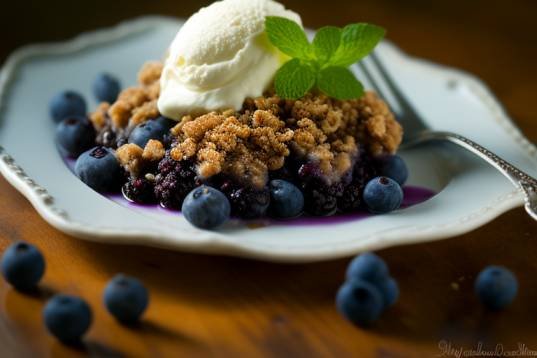
Blueberry Crisp
Ingredients
Chef’s tip: Fresh or frozen both work fine — the flavor difference is minimal. Frozen berries actually release liquid more evenly during baking, which some cooks find easier to control. The one rule: if you’re using frozen, toss them in straight from the freezer. Don’t thaw them first, or you’ll be starting with a puddle before you even open the oven.
Step-by-Step Instructions
Chef’s tip on pans: Skip anything deep and narrow, like a soufflé dish or loaf pan. The filling needs room to bubble and reduce, and the topping needs exposure to hot, circulating air. A wide ceramic or glass baking dish gives you the best ratio of crispy topping to fruit in every single bite.
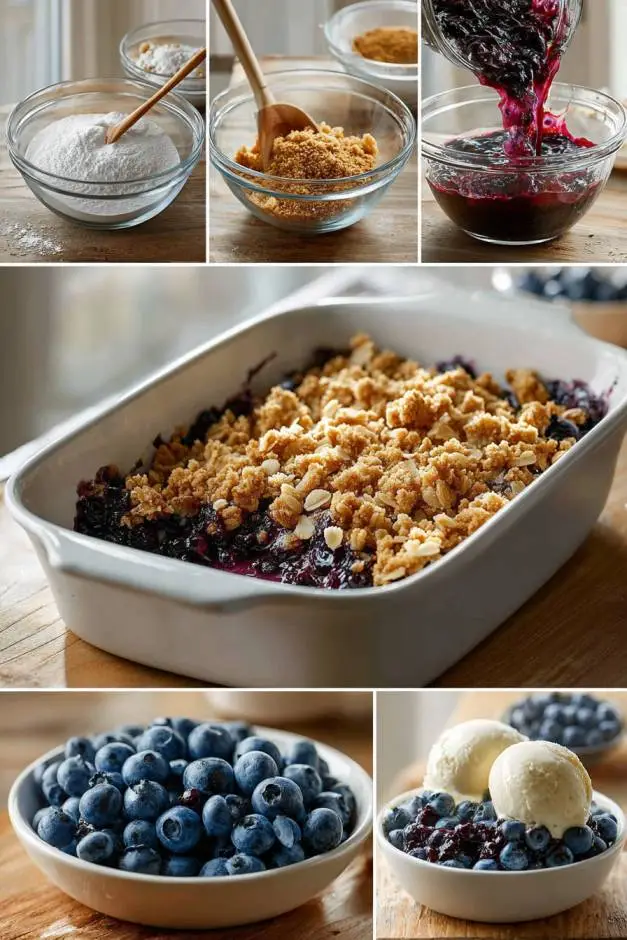
Preheat your oven to 375°F (190°C).
Position a rack in the center. If you’re worried about drips, slide a baking sheet on the rack below to catch any bubble-over — it saves you a scrubbing session later.
Make the filling.
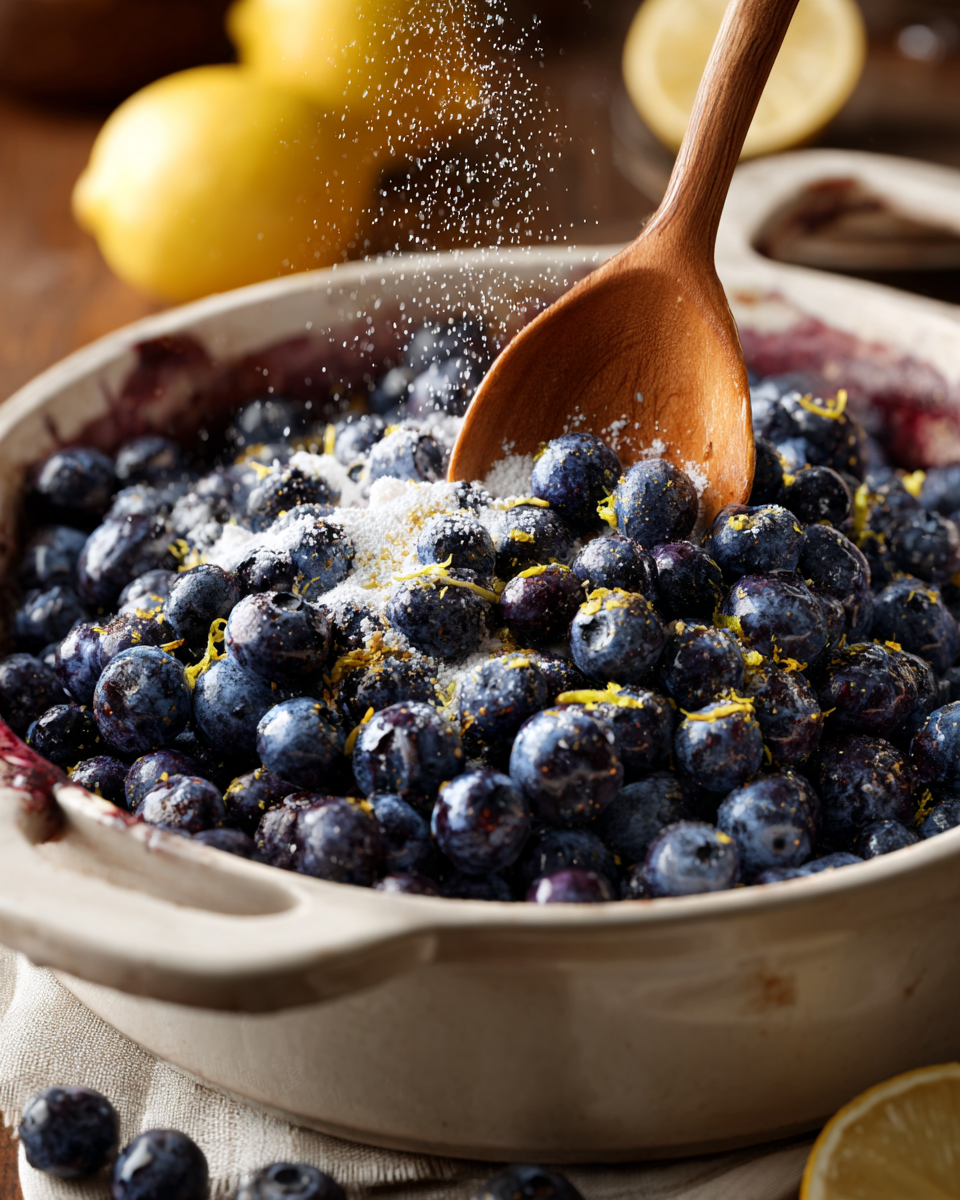
In a large bowl, combine the blueberries, sugar, cornstarch, lemon juice, lemon zest, cinnamon, and salt. Toss gently until every berry is coated. The cornstarch is doing the real work here — it’s what thickens the juices into a glossy, spoonable filling instead of runny liquid. Don’t skip it, and don’t eyeball the amount; too little and you’re back to soup.
Pour the filling into your baking dish.
Use a 9×13-inch dish or a wide, shallow 2-quart baking dish — something with plenty of surface area. Spread the berries into an even layer.
Make the topping.
In a separate bowl, whisk together the oats, flour, brown sugar, cinnamon, and salt. Add the cold, cubed butter and work it in with your fingers or a pastry cutter until the mixture looks like coarse, pebbly crumbs with some pea-sized butter pieces still visible. Stir in the nuts if using.
Top the fruit.
Scatter the topping evenly over the blueberries. Don’t press it down — you want loose, craggy clumps so air can move through and everything crisps up rather than compacts into a dense layer.
Bake for 40–45 minutes.
You’re looking for two signs of doneness: the topping should be deep golden brown, and the filling should be actively bubbling around the edges, not just simmering faintly. If the top browns too fast before the filling bubbles, loosely tent it with foil and keep baking.
Rest for 15–20 minutes before serving.
I know it’s tempting to dig in immediately, but this cooling period is what allows the cornstarch to finish setting the filling. Serve too soon and you’ll get gorgeous flavor with a soupier texture. Patience pays off here.
Serve warm,
ideally with a scoop of vanilla ice cream or a dollop of lightly sweetened whipped cream melting into the crevices.
Where Home Bakers Usually Go Wrong
In my experience teaching beginner cooking classes, almost every “failed” crisp traces back to one of three things: skipping the cornstarch, using a pan that’s too deep, or pulling the dish out of the oven before it’s actually bubbling. If your filling turns out watery, it’s almost never the fruit’s fault — it’s one of those three culprits. Fix the process, and the results follow.
Frequently Asked Questions
What’s the difference between a blueberry crumble and a blueberry crisp?
The topping is the whole story. A crisp always includes oats, giving it that signature crunchy, toasty texture. A crumble leaves oats out entirely, relying on flour, butter, and sugar rubbed into fine, sandy crumbs. Both sit on top of baked fruit, but a crisp will always have more texture and bite.
How do you prevent a soggy blueberry crisp?
Three things matter most: use enough cornstarch (3 tablespoons for 6 cups of fruit is the sweet spot), bake in a wide, shallow dish rather than a deep one, and don’t slice into it until it’s rested for at least 15 minutes after coming out of the oven. Skipping that rest is the single most common mistake I see.
Should blueberries be fresh or frozen for crisp?
Either works well. Fresh berries give slightly firmer texture, while frozen berries release juice more predictably, which can actually make the filling easier to control. The one rule: add frozen berries directly from the freezer, unthawed, so you’re not introducing extra liquid before baking even begins.
What is the best type of pan for blueberry crisp?
A wide, shallow baking dish — think a 9×13-inch pan or a shallow 2-quart ceramic dish — beats anything deep and narrow. More surface area means more of the topping gets direct heat exposure, so you end up with a higher ratio of crispy, golden topping to soft fruit in every serving.
A Dessert Worth Repeating
What I love about a good blueberry crisp is that it forgives almost everything except impatience. Get the cornstarch right, pick the right pan, and let it rest before you serve it, and you’ll turn out a dessert that tastes like it took real skill — because, in a way, it does. It’s just skill you now have.
Make this one for a Sunday dinner, a potluck, or just a Tuesday that needs something warm and a little sweet. And if you do — I’d genuinely love to hear how it turned out. Drop a comment below with your results, or tag your photos so the rest of us can see that golden, bubbling topping in action.
Tried this recipe?
Leave a comment below and let me know how your crisp turned out — and if you have a topping trick of your own, I want to hear it.